How to Reduce Group Think
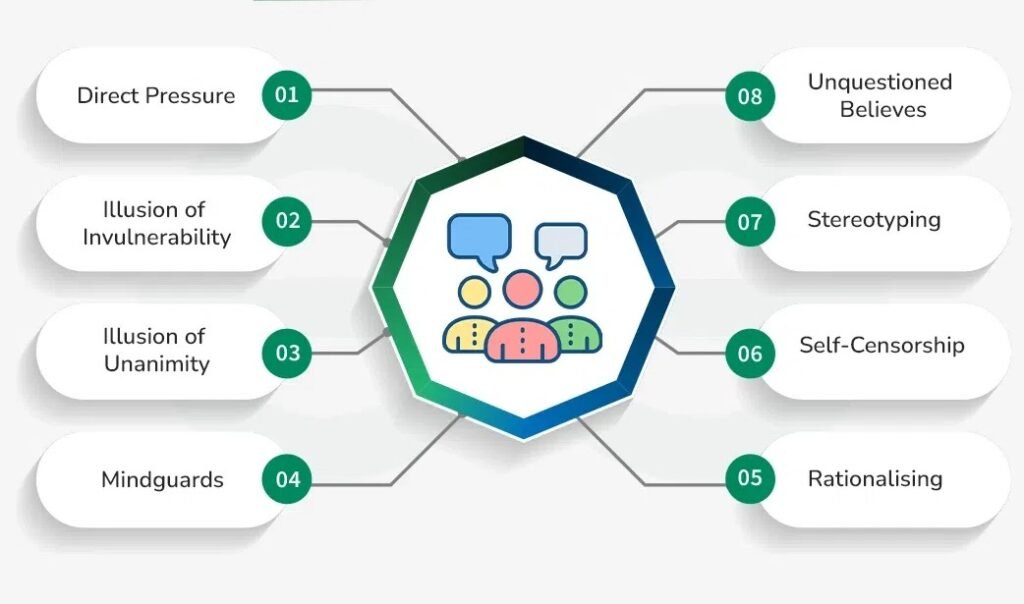
Group processes describe how individuals behave differently when they are part of a group compared to when they are alone. Groups can influence decision-making in ways that may lead to riskier, polarized, or irrational outcomes. One of the most important concepts here is Groupthink. Groupthink is a psychological phenomenon where the desire for harmony, consensus, or conformity in a group overrides rational judgment and critical evaluation of alternatives. It often leads to poor decisions because dissenting opinions are suppressed, and the group ignores potential risks.

Why Group Think Occurs
- Strong pressure to maintain group unity.
- Presence of a highly directive or authoritative leader.
- Lack of impartial leadership and critical evaluation.
- Insulation of the group from outside opinions.
- High stress or urgency to make quick decisions
Symptoms of Group Think
- Illusion of invulnerability (belief that the group cannot go wrong).
- Collective rationalization (dismissing warnings or negative feedback).
- Belief in inherent morality of the group.
- Stereotyping outsiders as wrong, weak, or ignorant.
- Pressure on dissenters to conform.
- Self-censorship by members (withholding doubts).
- Illusion of unanimity (assuming silence means agreement).
- Presence of mindguards (individuals who shield the group from contrary opinions).
Ways to Reduce Group Think
- Encourage open debate – allow and welcome critical opinions.
- Devil’s advocate role – assign someone to challenge the group’s ideas deliberately.
- Impartial leadership – leaders should avoid stating their preferences early on.
- Bring in external experts – fresh perspectives reduce insularity.
- Encourage sub-groups – smaller groups can generate diverse viewpoints.
- Second-chance meetings – revisiting decisions later to check for flaws.
Give Your feedback: