Artificial Intelligence in Modern Healthcare: A New Dawn for Medical Health and Clinical Practices
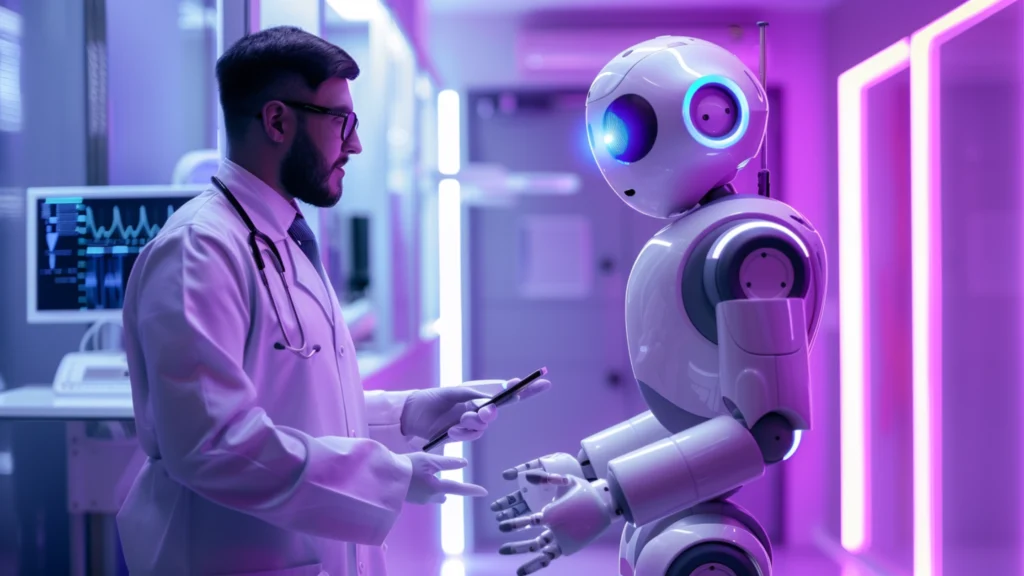
Imagine a surgeon’s steady hand augmented by a tool that never tires, a diagnostician whose mind is illuminated by insights drawn from millions of cases, a psychiatrist able to predict a patient’s risk of relapse before symptoms surface. Artificial Intelligence (AI) is weaving threads into the medical tapestry that once seemed pure science fiction. For Medical Studnets and Doctors especially Psychiatrists who study the brain, behaviour, diagnosis, treatment and prognosis, understanding how AI is transforming medicine isn’t optional — it’s essential.
What Is AI Doing in Medicine Right Now
Ai (Artificial Intelligence) refers to systems or machines designed to mimic human intelligence, carrying out tasks and continuously improving through the information or data they receive. Just as humans learn from experience, performing better each time they repeat a task and growing with knowledge, Ai follows the same principle. Its core purpose is automation, the ability to work seamlessly, tirelessly, and with consistent precision. This is why Ai is being embraced worldwide. Today, it is integrating itself into nearly every aspect of our lives, with one of the most profound impacts seen in the field of medical sciences.
In medicine this shows up in many forms:
Diagnostic tools (image analysis, pattern recognition)
Predictive analytics (forecasting outcomes, risks)
Robotics (surgery, prosthetics)
Personalized treatment planning
In psychiatry the impact is especially promising because mental health depends not only on what the doctor observes but on subtle patterns in dat, from speech to sleep, from behaviour to biomarkers.
How AI Integrates with Medical Fields
Think of AI as a powerful assistant who sees what the human eye misses, listens to what the ear can’t hear, and remembers what memory forgets.
Here are integration pathways:
Data + Machine Learning = Faster, Smarter Diagnoses
AI systems trained on countless MRI scans or brain images can flag tumours, lesions or changes in brain structure faster (sometimes more accurately) than doctors working alone. This frees psychiatrists and neurologists to focus more on interpretation, therapy, compassion.
Continuous Monitoring + Wearables
Smartphones, wristbands, even bathroom scales can track mood swings, sleep quality, heart rate variability. AI can notice patterns, reduced sleep plus higher heart rate variability might predict a depressive relapse. For patients this means more proactive care, not waiting until crisis.
Natural Language Processing
AI tools can analyze speech, text from clinical notes, even social media writing to detect signs of mental distress, risk of self-harm, or psychosis. Subtleties in word choice or tone that humans might miss become visible.
Treatment Personalization
What works best for one patient might fail for another. AI helps sift through data (genetic, demographic, psychological) to suggest which medication or therapy is likeliest to help, and to predict side effects.
Revolutionary Medical Inventions That Changed the World
- It’s challenging to imagine a world without modern medicine and health care services.The medical field is renowned for its rapid innovation, with only a handful of industries having a comparable impact on humanity. These significant innovations demonstrate our gradual progression to a higher level year after year, to achieve such remarkable feats. While not all diseases have been eradicated, scientific advancements have enabled us to triumph over many battles. In celebration of these remarkable advancements, we will delve into twenty revolutionary medical inventions that have forever transformed hospitals and the medical industry as a whole.
- here are some of the exciting advances in AI + medicine, especially relevant to psychiatric/neurological fields:
- Brain Scanning
- A new AI software is “twice as accurate” as professionals at examining the brain scans of stroke patients. Two UK universities trained the software on a dataset of 800 brain scans of stroke patients and then trialed it on 2,000 patients. The results were impressive. Alongside the AI model’s accuracy, the software was also able to identify the timescale within which the stroke happened – crucial information for professionals. As Dr Paul Bentley, consultant neurologist, told the Health Tech Newspaper: “For the majority of strokes caused by a blood clot, if a patient is within 4.5 hours of the stroke happening, he or she is eligible for both medical and surgical treatments. Up to 6 hours, the patient is also eligible for surgical treatment, but after this time point, deciding whether these treatments might be beneficial becomes tricky, as more cases become irreversible. So it’s essential for doctors to know both the initial onset time, as well as whether a stroke could be reversed.”
- Reference
- Early Diseases Detection
- A new AI machine learning model can detect the presence of certain diseases before the patient is even aware of any symptoms, according to its maker AstraZeneca. Using medical data from 500,000 people who are part of a UK health data repository, the machine could “predict with high confidence a disease diagnosis many years later”. Slavé Petrovski, who led the research, told Sky News: “For many of these diseases, by the time they manifest clinically and the individual goes to the doctor because of an ailment or visible observation, that is far down the line from when the disease process began. “We can pick up signatures in an individual that are highly predictive of developing diseases like Alzheimer’s, chronic obstructive pulmonary disease, kidney disease and many others,” he said.
- Another UK study has found that an AI tool can successfully detect 64% of epilepsy brain lesions previously missed by radiologists. Trained on the MRI scans of over 1,100 adults and children globally, the AI tool was able to spot lesions more quickly than a doctor, but also discover tiny or obscured ones that had evaded the human eye.”It’s like finding one character on five pages of solid black text,” lead researcher Dr Konrad Wagstyl told the BBC. “AI can find about two-thirds that doctors miss – but a third are still really difficult to find.” Combining AI’s findings with human oversight and expertise has the potential to speed up both diagnosis and cure, the researchers say.
- Reference
- Brain-Signal Decoding
Researchers are now using machine learning to decode brain signals in people with paralysis, allowing them to control robotic limbs or cursors by thought alone. This not only brings hope for motor disorders but deepens our understanding of neural coding.
- Predicting Onset of Psychosis
Some AI models trained on brain imaging and clinical data are starting to predict which high-risk individuals will develop psychosis, months in advance. If validated, this allows preventive treatments rather than reactive ones.
- Early Alzheimer’s Detection through Speech Analysis
Even small changes in vocabulary, pauses, or grammar show promise as early markers of Alzheimer’s disease. AI tools analysing natural speech are beginning to flag such changes before imaging or symptoms are obvious.
- Personalized Depression Treatment via Genetic and Behavioral Data
Studies are combining genomic data, patient history, lifestyle data and even smartphone activity (sleep, movement) to predict which antidepressant is most likely to work for an individual reducing trial-and-error in treatment.
- AI-driven Telepsychiatry and Chatbots
Especially since the pandemic, chatbots powered by AI have been able to support mental health by delivering cognitive behavior therapy techniques, monitoring patient mood, offering crisis resources, and giving continuity when human clinicians are less available.
- Prosthetic Robot Arm
- Perform your daily tasks with natural ease. Six Motors generate smooth and precise finger movements. Personalize your grip for a truly unique experience. Intuitively control a bionic hand that moves naturally. Esper Control is a method to translates your natural muscle movements into accurate hand gestures.
- XRay or Tumor Irradiation Robot
- Robots with payload capacities ranging from 50 to 500 kilos are ideal for heavy duty medical applications and products such as patient positioning, pinpoint tumor irradiation, or X-rays. For example, the KR are Quantic with a handling capacity of up to 300 kilos. Has been equipped with a C-Arm and an X-ray imaging system, enabling its use in an interventional room. It can perform imaging while the patient is sitting or adjust to a high or low position on the table, depending on the ongoing procedure.
- Vinci XI Surgical System
- This system has revolutionized the way surgeons perform surgery on our planet. Robotics enhances the abilities of surgeons. Fourth generation Da Vinci surgical systems continue to push the boundaries of minimally invasive surgery or MIS in various surgical procedures. It feels like the surgeon’s own hand is inside the patient’s. Due to its minimally invasive nature, the incisions made by surgeons are much smaller, resulting in reduced pain. Da Vinci Xi also offers simplified setup and port placement. With modular interchangeable components, the system can adapt and expand according to needs.
- Parkinsons Glove
- Can Parkinson’s Symptoms be alleviated? A recent trial with a small sample of patients discovered that wearing the glove for 2 hours twice a day reduces tremors, stiffness, irregular walking, slow body movements and balance problems associated with Parkinson’s disease. The outcome of this research is a lightweight, strappy glove that resembles something out of a science fiction film. The glove can be warm while going about daily activities and is connected to a device that emits 250 hertz, bursts through pin sized apertures on plastic pads strapped to the index, middle ring and pinky fingertips.
- Digital Twin
- Digitalization will transform every aspect of health care, and Siemens has developed an app for this purpose. Patients will have a digital twin, a unique computational model of themselves, allowing doctors to diagnose illnesses, provide therapy recommendations and predict surgical outcomes. CT images are used to create a 3D representation of a patient’s anatomy, which is then projected directly onto the surgical field. These visualizations enhance the surgical team’s vision, while intelligent navigation software guides essential steps of the intervention.
- Accuvane
- AccuVein provides hands-free solutions that are perfect for any medical situation where vein viewing is required for the patients. AccuVein allows clinicians to visualize veins, valves, and bifurcations that would otherwise be invisible to the human eye. This enables more informed judgments, better needle placement and improved patient care. It offers an enhanced approach to peripheral IV assessment and access by projecting a colorful map of underlying superficial veins, bifurcation and valves onto the skin. These are often impalpable and unseen to the human eye.
- ReWalk
- It’s more than just walking; it’s a transformative experience. ReWalk is a wearable robotic exoskeleton that provides powered hip and knee movements to people with spinal cord injuries or SCI, enabling them to stand up, walk, turn and ascend and descend stairs. ReWalk is the first exoskeleton to receive FDA approval in the United States for personal and rehabilitation use.
- Blue Portable Ultrasound Scanner
- In life threatening scenarios, accurate assessments of a patient’s clinical status and quick decision making are crucial. The BLUE ultrasound scanner assists in these tasks with its high image quality and simple intuitive operation. Active fields enable easy configuration of standard parameters. After freezing the image, no additional menu is required to measure the distance. The DRAMISKI BLUE portable scanner includes three Doppler imaging modes: Color Doppler, Power Doppler and Pulse Wave Doppler. This technology allows examination of blood flow in blood arteries.
- Moxi
- Moxi empowers clinical professionals to accomplish more in less time. Moxi’s automation simplifies routine tasks. Moxi assists clinical personnel with non-patient-facing chores such as managing patient supplies, enabling hospitals to operate 24 hours a day, seven days a week. Tasks performed by Moxi include providing lab samples, retrieving items from the central supply, distributing personal protective equipment or PPE, and distributing medication.
- LBR iisy Cobot
- LBR iisy Cobot is highly adaptable, user-friendly and reliable when interacting with humans. The robot utilizes the iiQKA.OS operating system, making installation configuration and programming simple. Manual guiding makes it easy to teach tasks. The LBR iisy has an incredibly fast joint speed, making it as agile as a standard industrial robot.
- Skin Vision
- SkinVision is a regulated medical service that gives you greater control over the health of your skin. It enhances your ability to self examine your skin and increases your understanding of when, how and why to take action. It aims to provide reliable, personalized skin health advice and guidance, as well as accurate and prompt skin cancer diagnosis. At the core of the service is the SkinVision app, a regulated medical device that combines A.I. technology with the experience of skin health professionals and dermatologists.
- Pillow
- The most intelligent and user friendly way to manage your family’s health. Pillo empowers people of all ages to improve their health management. It can answer your health and wellness questions, connect you directly with health care providers, and securely handle your vitamins and prescription needs by storing, dispensing, and even ordering refills as necessary. And as an intelligence device, its capabilities expand as it learns more about you and your family. Pillow provides the tools and knowledge you need to stay healthy, whether you’re a fitness enthusiast, caregiver, or simply in need of assistance with your wellness plan.
- BioLeg
- Bio Leg utilizes humanoid robotics technology to aid user mobility. Bio Leg is a new type of prosthetic leg equipped with a motorized microprocessor knee. It enables more natural movements and active participation by replacing reduced muscle strength with prosthetic power.
- YHE BP Dr Med
- The YHE BP Doctor MED is the world’s first true wearable blood pressure smartwatch of medical grade. It features a revolutionary dual inflated air cuff design that continuously monitors your blood pressure changes 24/7 using traditional oscillometric BP measurement. BP Doctor Med not only monitors your blood pressure, but also tracks your daily activities and sleeping patterns, providing comprehensive health insights.
- Surgical Skin Stapler
- Surgical staplers are specialized devices used in surgery to close skin wounds instead of sutures. The use of staples instead of sutures reduces local inflammation, wound width, and healing time. Modern surgical staplers come in disposable plastic or reusable stainless steel varieties. Both types use disposable cartridges for loading. Surgical staples typically remain in place for several days or up to 21 days in certain situations before they can be removed.
- Swoop
- Swoop, the world’s first AMR imaging system capable of providing neuroimaging at the point of care, can help doctors diagnose and treat patients in various clinical situations. Swoop is well suited for rapidly changing clinical scenarios as it can be transported to almost any location and provide neuroimaging within minutes. The SWOOP system designed to fit inside elevators and pass through doorways, navigates through busy healthcare environments to reach a patient’s bedside at the point of care. The technology is compact and portable, making it ideal for neuroimaging in acute care units and pediatric hospitals.
- Kinser Smart Ear Thermometer
- The Kinsa Ear Thermometer is a lifesaver for parents. Fortunately, devices and applications catering to busy new parents or forgetful ones like myself are gaining popularity. The Kinsa ear thermometer is the latest addition to this movement, and its purpose is simple. It records the time and date of your child’s temperature readings and associates them with any accompanying systems such as coughing. In addition to the device to app connection, the thermometer provides precise temperature readings in approximately a second, making it easy to use on your wriggling child.
- Vipro Head 5
- Kraft Health Private Limited in Singapore, one of ViscoTec Tech Asia’s customers, utilizes the vipro-HEAD 5 print head for 3D printing of nutraceuticals and pharmaceutical. Our 3D printheads enable the use of a new class of materials for additive manufacturing, liquids and pastes. Highly intriguing materials such as silicones, ceramic pastes and polyurethanes are now available for 3D printing.
- Hologram Hospitals
- For decades, the promise of 3D holograms from phones, televisions or favorite droids has captured widespread enthusiasm, but has yet to materialize. These holograms have numerous applications, especially in the field of MedTech, where real time dynamic holograms are expected to reduce operation times and improve surgical outcomes. Cambridge University Hospitals, NHS Foundation Trust, or CUH is developing HoloScenarios. A novel training program based on lifelike holographic patient situations. Learners wearing Microsoft HoloLens mixed reality headsets in the same room can see each other in real time while interacting with a multi-layered, medically accurate holographic patient. This creates a unique setting for learning and practicing critical, real time decision making and treatment options.
- Ambulance Drone
- And now we come to the last and most crucial innovation. The first few minutes after an injury are crucial for providing appropriate care and preventing further escalation. Rapid emergency intervention can save lives and significantly expedient recovery, especially in cases of heart failure, drowning, trauma and respiratory problems. Life saving technologies such as an AED medication and Cardiopulmonary Resuscitation or CPR assistance can be miniaturized and carried by a drone. The ambulance drone features a new type of frame, a compact flying toolbox that carries essential materials for advanced life support by laypersons.
While these new innovations in the healthcare field, one of the most important aspects of our lives excite us, they also reinforce our belief that we should be prepared for more. Isn’t it wonderful to witness the use and development of technology in this field.
Challenges and Ethical Considerations
While the promise of Ai in medicine is breathtaking, it also arrives with challenges that cannot be ignored. Medicine with Ai has risks:
Data privacy: patient data is sensitive. We must guard it well.
Bias in algorithms: if training data is skewed (e.g. under-representation of certain ethnicities, or age groups), predictions might be unreliable or unfair.
Over-reliance: clinicians must avoid treating AI predictions as gospel; human judgment remains key.
Explainability: many AI models are black boxes. In psychiatry especially, understanding why the prediction was made is important for trust.
Give Your feedback: